
Can You Sublimate on Cotton?
Sublimation ink needs a compatible polyester surface. Learn what happens on cotton, how blends change the result and which cotton workarounds are worth testing.
Can You Sublimate on Cotton? Understand the Workarounds First
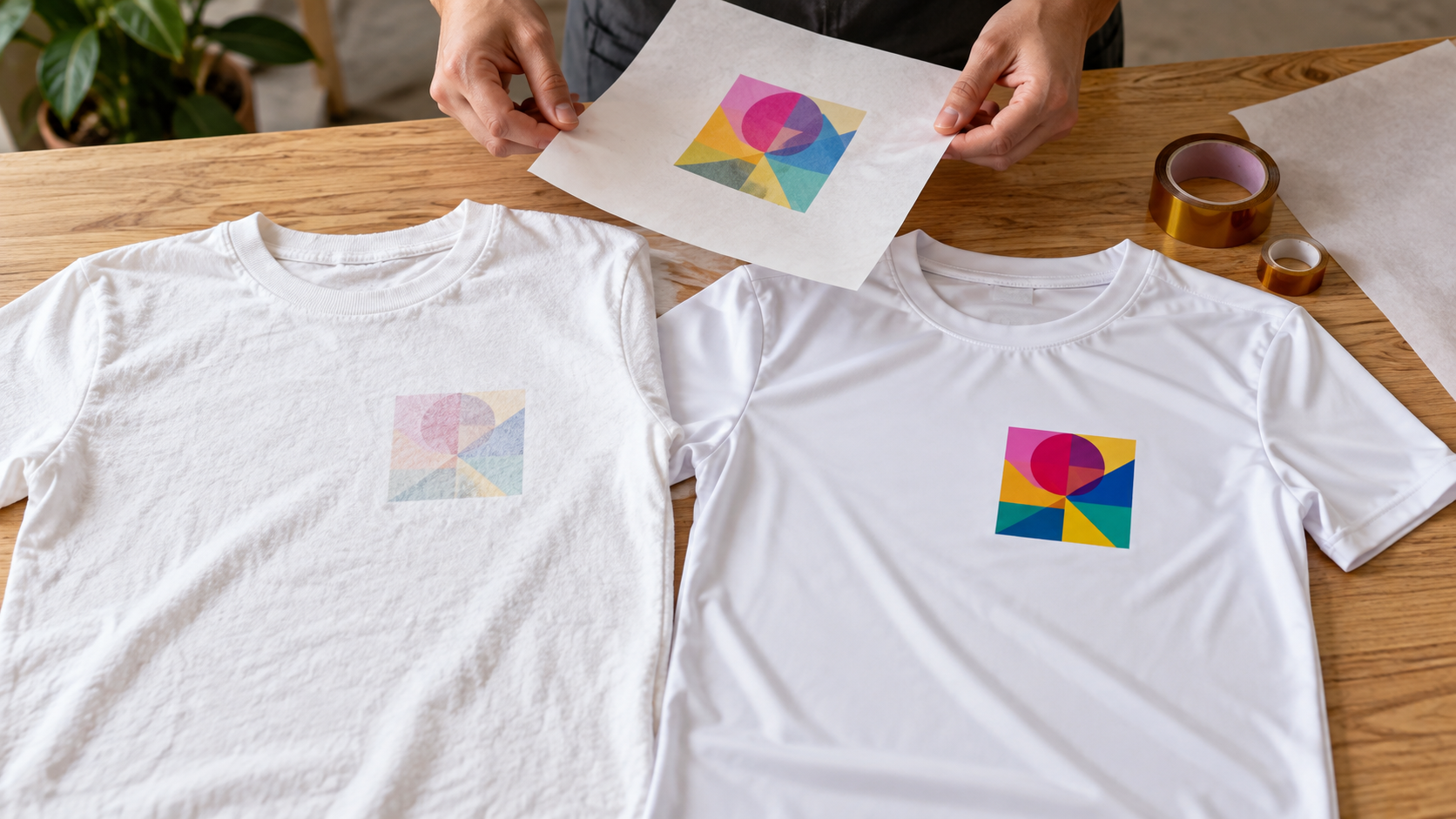
Put a sublimation print face down on a white cotton shirt, close the heat press and the image may look surprisingly good when the paper comes off. The problem often appears after washing: the color fades because ordinary sublimation dye did not form the intended bond with the cotton fibers.
That does not mean sublimation artwork can never be used on a cotton garment. It means you need to distinguish direct sublimation from a process that first adds a sublimation-receptive layer.
Why Direct Sublimation Does Not Bond to Cotton
In dye sublimation, heat converts solid dye into a gas without an intermediate liquid stage. The U.S. Geological Survey describes this solid-to-gas change as sublimation. In apparel printing, that gaseous dye is intended to diffuse into a compatible polymer surface and become part of it as the material cools.
Polyester provides that receptive polymer structure. Untreated cotton does not. Cotton may temporarily hold loose dye after pressing, but that is different from a durable polyester bond.
The Brownsville Public Library Makerspace, which operates a Sawgrass sublimation printer, tells users that appropriate blanks typically have a polyester coating or composition. Its guidance states that 100% cotton items cannot be directly sublimated and recommends polyester or a blend for fabrics.
This is also why conventional sublimation works best on white or very light substrates. Sublimation ink is transparent; it does not lay down an opaque white base that hides a dark garment.
What Happens on Cotton-Polyester Blends
A cotton-polyester blend can accept dye in proportion to its polyester content, but the practical result also depends on knit construction, shirt color, dye load and artwork.
A high-polyester white shirt normally produces stronger color retention than a low-polyester blend. A 50/50 shirt may deliver a intentionally soft, weathered result, but it should not be sold as equivalent to a vivid print on a sublimation-ready polyester blank.
Always wash-test the actual style and color. Two shirts with the same listed fiber percentages can use different yarns, finishes and constructions.
Also remember that high heat can affect the garment before the ink becomes the issue. Synthetic blends may show shine, platen marks or dye migration. The previous guide to heat pressing hoodies explains why garment structure and heat sensitivity must be considered separately from the transfer recipe.
Reliable Ways to Put Sublimation Artwork on Cotton
Sublimation-Receptive Heat Transfer Vinyl
One established approach is a printable heat-transfer material engineered to receive sublimation ink and adhere to cotton. The dye bonds to that added material rather than directly to the cotton.
Siser EasySubli is one commercial example. Siser describes it as an inkjet-printable heat-transfer vinyl that works on light and dark fabric. Follow the current instructions for the printer, ink, material, mask, pressing sequence and garment. Do not substitute a generic HTV recipe.
This method can deliver bright color on cotton and colored garments, but it changes the hand. The finished design includes a film layer, so artwork shape and coverage matter. A large solid rectangle feels different from a contour-cut design.
Sublimation Coatings and Sprays
Some products add a polymer coating to cotton before sublimation. Quality, wash durability, hand and application consistency vary widely.
Treat any coating as a complete chemical system. Review its safety data, ventilation requirements, fabric compatibility, cure process and washing instructions. Do not assume a craft coating is appropriate for garments sold to customers or that adding extra spray improves durability.
Run a documented wash test before production. If the supplier does not provide clear technical instructions, the shop is accepting an avoidable risk.
A Different Transfer Process
Sometimes the cleanest cotton solution is not sublimation.
DTF transfers, screen-printed transfers, printable HTV and cut HTV can all be selected for cotton without pretending that the cotton itself is being sublimated. The best choice depends on artwork, quantity, fabric color, hand, durability target and production equipment.
This is an important quoting distinction. A customer asking for “sublimation” may really want a full-color image with no minimum, not a specific dye process. Clarify the desired result before choosing the transfer.
How to Test a Cotton Sublimation Workflow
Use an identical blank, not a scrap with unknown composition.
- Confirm the garment fiber content, color and care instructions.
- Select a documented cotton-compatible system.
- Follow its complete time, temperature, pressure and peel sequence.
- Protect the press and garment as directed.
- Let the sample cool before judging color and hand.
- Record the exact blank, transfer lot and settings.
- Wash and dry the sample according to the supplier’s required waiting period and care method.
- Compare color, edges, cracking, lifting and hand after multiple cycles appropriate to the job.
Temperature shown on a controller is not proof that every part of the platen is delivering the same heat. If results vary by location, test your heat press temperature. If adhesion fails around one edge, use the heat press pressure guide to check loading before changing several variables at once.
Common Cotton Sublimation Failures
The direct print looks good but washes out: The dye colored the surface temporarily without a durable polyester bond.
Colors look muted on a blend: The polyester percentage may be too low for the expected result, or the garment color may be influencing transparent ink.
The design has a visible film edge: A sublimation-receptive HTV layer was used. Contour cutting or different artwork may reduce the boxed appearance.
The coating feels stiff or uneven: Application coverage, cure or product choice may be inconsistent. Stop production and follow the coating manufacturer’s procedure.
One area transfers lighter: Check platen temperature, pressure, seams, wrinkles and moisture. Do not automatically extend the press cycle.
Choose the Method by the Finished Product
Choose direct sublimation when the blank is specifically suitable and the goal is a lightweight, embedded print. Choose a receptive HTV when bright sublimation color on cotton outweighs the added film feel. Choose another transfer process when it offers a simpler, more predictable cotton application.
Press size also matters when full-color art becomes large. The design must fit inside the uniformly heated and pressured area; the 15×15 versus 16×20 heat press guide explains the production tradeoffs.
The Bottom Line
Ordinary sublimation does not permanently dye untreated cotton. A cotton blend may produce a deliberately faded look, while receptive HTV or a tested coating creates a separate surface for the dye.
Define the desired color, feel and durability first. Then choose a documented system, test the exact garment and wash the sample before accepting the order.
Browse more Alien Press Field Notes for practical application guidance, or review the Alien Press lineup when your shop needs dependable equipment for its transfer workflow.
Frequently Asked Questions
Can you sublimate directly onto a 100% cotton shirt?
Not with the durable polyester-bonding result expected from conventional sublimation. Untreated cotton requires a compatible intermediary product or a different transfer method.
What polyester percentage is best for sublimation?
Higher polyester content generally retains more dye and produces stronger color, but the exact result depends on the blank. Use a sublimation-ready garment and test it.
Will sublimation wash out of cotton?
Direct sublimation dye can appear on cotton after pressing but typically fades because it did not form the intended bond with polyester.
Can I use sublimation HTV on dark cotton?
Some receptive HTV products are designed for light and dark fabrics. Follow the exact product’s compatibility, printing, masking and pressing instructions.
Is sublimation spray permanent on cotton?
Durability depends on the specific coating, application and cure. Do not promise permanence without manufacturer documentation and repeated wash testing on the actual garment.